











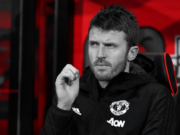




On April 21st, 2022, Manchester United were delighted to announce the arrival of Erik ten Hag as manager. On July 4th, 2024, Dan Ashworth, the club’s then sporting director, expressed his satisfaction when extending the manager’s contract.
In October of the same year, Manchester United announced they’d parted ways with their manager and that Ruud van Nistelrooy would be taking over as interim head coach.
To be clear, in a few lines of text which announced Ten Hag’s departure, the club went from a sporting director with a manager to one looking to appoint a head coach: ‘Ruud van Nistelrooy will take charge of the team as interim head coach, supported by the current coaching team, whilst a permanent head coach is recruited.’
On November 1st, Ruben Amorim arrived. It was made clear he would be Head Coach.
This isn’t an unusual situation, especially on the continent. Big clubs can these days be too big for one man to steer, and therefore a leadership group shares the responsibility and accountability.
Running a club this way also helps with continuity. Too often, when a manager departs a football club the squad isn’t suitable for the next incumbent. Having a head coach who works within a club framework of style and recruitment can avoid this happening.
Erik ten Hag had clearly been too hands in on recruitment, regardless of how he may have tried to change the perception since, and therefore a change in the command at Old Trafford appeared to make sense.
“The coach will have to play that style”
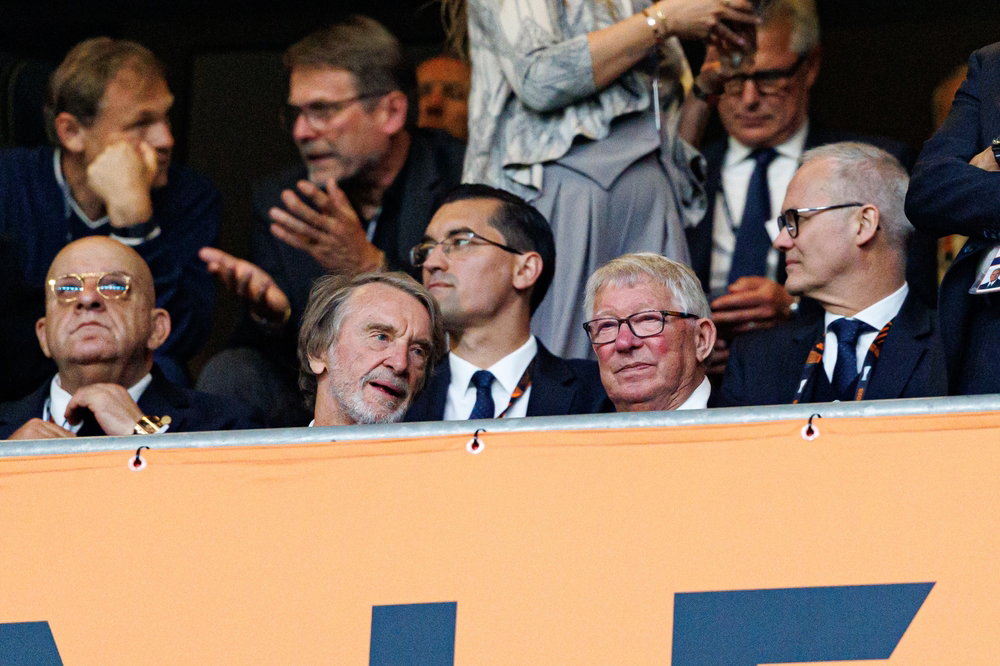
In February 2024, Jim Ratcliffe set out his grand plan for how things would be different at Manchester United going forward. Never again would a manager dictate style and have a squad built specifically for that.
Youth would be important, with Ratcliffe clearly attached to the idea of academy graduates becoming stars.
“In terms of the nature of the players, you want Manchester United types of players… attacking football, exciting football, bringing the youth through. You want players that are committed. You want players that play 90 minutes, those are the types of players you want playing for Manchester United,” explained Ratcliffe.
“The academy is really really important for us. It’s probably the most successful academy in football in terms of number of players that have come through.
“We’ll decide that style, plus the CEO, sporting director, probably the recruitment guys, what the style of football is and that will be the Manchester United style of football, and the coach will have to play that style.”
A month before those comments, Ratcliffe had agreed a deal for Omar Berrada to arrive as CEO in July. Jason Wilcox had already arrived as Technical Director in April and then, after a long chase and a big compensation payment to Newcastle United, Dan Ashworth became Sporting Director in July.
Everything was in place. When Manchester United next needed a new manager, he would come in to fit a club style and that would be dictated to him. Jim had said so, remember.
Manchester United signings · 2022–2024
| Window | Player | From | Initial fee / deal |
|---|---|---|---|
| Summer 2022 | Tyrell Malacia | Feyenoord | £13m |
| Summer 2022 | Christian Eriksen | Free agent (Brentford) | Free |
| Summer 2022 | Lisandro Martínez | Ajax | £46.8m |
| Summer 2022 | Casemiro | Real Madrid | £60m |
| Summer 2022 | Antony | Ajax | £81.3m |
| Summer 2022 | Martin Dúbravka | Newcastle United | Loan |
| January 2023 | Jack Butland | Crystal Palace | Loan |
| January 2023 | Wout Weghorst | Burnley | Loan |
| January 2023 | Marcel Sabitzer | Bayern Munich | Loan |
| Summer 2023 | Mason Mount | Chelsea | £55m |
| Summer 2023 | André Onana | Inter Milan | £43.8m |
| Summer 2023 | Rasmus Højlund | Atalanta | £64m |
| Summer 2023 | Altay Bayındır | Fenerbahçe | £4.3m |
| Summer 2023 | Jonny Evans | Free agent (Leicester City) | Free |
| Summer 2023 | Sergio Reguilón | Tottenham Hotspur | Loan |
| Summer 2023 | Sofyan Amrabat | Fiorentina | Loan |
| Summer 2024 | Joshua Zirkzee | Bologna | £36.5m |
| Summer 2024 | Leny Yoro | Lille | £52.2m |
| Summer 2024 | Matthijs de Ligt | Bayern Munich | £38.5m |
| Summer 2024 | Noussair Mazraoui | Bayern Munich | £12.8m |
| Summer 2024 | Manuel Ugarte | Paris Saint-Germain | £42.1m |
Fees are approximate reported initial amounts in pounds, excluding potential add-ons. “Loan” does not imply that no loan fee was paid. Free agents’ previous clubs are shown in brackets.
Sources: Manchester United, BBC Sport, Sky Sports and Sports Illustrated.
Ruben Amorim with early identity crisis
At the beginning of November 2024, Manchester United announced the arrival of Ruben Amorim as their head coach.
In his first press conference, he was asked about his level of influence on transfers. That was a reasonable question given what had been said before.
Amorim, however, didn’t appear to be playing ball: “I am the manager, the head coach and I have to choose the players.”
At Sporting club de Portugal, he’d been used to a structure with a sporting director and vocal president. Hugo Viana, now at Manchester City, worked closely with Amorim on recruitment. Frederico Varandas often fronted up to the media in difficult times, and both men would attend Amorim’s press conferences in times of strife.
The manager’s appointment was questioned by some at the time due to his rigid playing style at Sporting. Given how Manchester United had been changing their chain of command, there was an assumption Amorim would be flexible and change his style… even if only slightly.
Of course, that didn’t happen and he was utterly determined to stick to his guns. Players were bought specifically for the unusual system and Ratcliffe’s grand plan had fallen at the first hurdle.
Not only that, it became increasingly clear that rather than looking at academy products as a pillar of the club’s culture, a shift had happened. Capital gains and profit for Amorim to spend on players who suited his system was the new road taken.
Ultimately, he went on to have the worst points per game record of any Manchester United manager, or head coach, in the Premier League era.
Manchester United signings · 2024–2026
| Window | Player | From | Initial fee |
|---|---|---|---|
| Winter 2025 | Ayden Heaven | Arsenal | £1.5m |
| Winter 2025 | Patrick Dorgu | Lecce | £25m |
| Summer 2025 | Matheus Cunha | Wolverhampton Wanderers | £62.5m |
| Summer 2025 | Diego León | Cerro Porteño | £3.3m |
| Summer 2025 | Bryan Mbeumo | Brentford | £65m |
| Summer 2025 | Benjamin Šeško | RB Leipzig | £66.3m |
| Summer 2025 | Senne Lammens | Royal Antwerp | £18.1m |
| Combined reported initial fees | £241.7m | ||
Fees are approximate reported initial amounts in pounds, excluding potential add-ons, wages and agent fees. Heaven’s figure is reported compensation. Academy-only recruitment and returning loanees excluded. Signings were made during Amorim’s time in charge and were not necessarily selected solely by him.
Sources: Manchester United, BBC Sport, The Standard and The Independent.
Binfire of squad planning
Ruben Amorim had suffered partly due to some poor recruitment prior to his arrival. The man to follow him was always going to have an even tougher time.
Appointing the Portuguese coach meant ripping up the idea of club recruitment and style, and it was telling when Dan Ashworth departed not long after Amorim’s arrival.
Jason Wilcox happily stepped into the role and oversaw his head coach dictate what recruitment was required. If that meant selling off some academy products then so be it.
But even that was handled appallingly. Marcus Rashford couldn’t be forced out permanently and ended up on loan at Barcelona with a €30m clause. That clause was entirely optional and he returned this summer.
Efforts to sell Alejandro Garnacho to Napoli in January 2025 fell apart, in a deal that would have been worth as much as €60m including bonuses. The Argentine then turned chief misfit and was sold to Chelsea the following summer.
At the time of the Garnacho to Napoli drama, it was reported in Italy that Kobbie Mainoo was also being offered to Serie A clubs. That appeared to be an unthinkable scenario, although it quickly became clear there was truth in the claims and United were open to parting ways with the midfielder.
The Mainoo situation was perhaps the first time the tide really turned, and Amorim didn’t like it. During his playing career, the midfielder had a run in with Jorge Jesus, his manager at Benfica and now fighting Cristiano Ronaldo with the national team.
Amorim criticised Jesus whilst away with Portugal, saying the manager appeared to be against picking Portuguese players such as himself. Not long after those comments, the then midfielder refused to take part in training with unused substitutes and was sent on loan to Braga.
Mainoo didn’t come close to such petulance, however, Amorim appeared personally offended that he hadn’t just left and provided more capital gains to be spent on system players.
When Michael Carrick took over as interim head coach, Mainoo was a quick beneficiary. The former Middlesbrough manager turned the club’s season on its head and qualified for the Champions League.
But the squad was unbalanced, to have a good chance of success there needed to be big and smart recruitment. Now was the time for Wilcox to shine.
A left back was thought to be high on the agenda. Joshua Zirkzee needed to be dispensed with and replaced with a back-up for Benjamin Sesko, who had been out with a tricky injury since May. And, of course, a midfield rebuild was required.
Head Coach not getting support a Head Coach should
Whatever the arguments over blame and reasoning, Carrick has been left with a woefully inadequate squad. But he’s just the head coach remember, surely Wilcox has been fronting up and taking heat away from his appointee? Well, erm, No.
The whole idea behind the head coach structure implemented by Wilcox and Berrada, and backed by Ratcliffe, is that there’s more support around the man in charge. That when things are difficult, it’s not just one man against the world.
Discontent behind the scenes moved into the public sphere when Lisandro Martinez lost his cool following the 2-0 defeat to Atletico Madrid.
Referring to the summer recruitment, Martinez said: “I expect more from our technical director. You can’t keep changing, changing, changing the manager. What about other areas? I can’t say more.”
This time, it would be difficult for Wilcox to hide. Given comments were being made about him and specifically his contribution, he’d have to front up. There’s no way it would be fair to leave it to Carrick. After all, the sporting director is there to assist and shield the head coach, not to hide behind the latter when personally targeted.
And yet, nothing.
Wilcox’s lack of fronting up has been so noticeable that even Carrick has been asked if his boss should speak to the media more: “I don’t think that’s for me to say, whether he should or not.”
His last substantial interview was with the club’s own media in November 2025.
Power without accountability needs to end
Michael Carrick can and should be questioned over his selections, tactics, in game management and whether he’s getting enough from the players available. A head coach still has to coach.
But who answers for the squad he’s been given? Who explains the priorities of the summer window, the gaps left behind and how any of it fits the footballing identity Jim Ratcliffe promised?
Those are questions for Jason Wilcox and Omar Berrada. Leaving Carrick to answer them at every press conference makes a mockery of the structure they helped build.
Another managerial change would give Manchester United a new face to present to the cameras. It would also leave the same people choosing that face, assembling the squad and deciding the limits of authority.
Before they make that decision again, they should explain why their framework keeps producing a head coach who needs replacing.
Ratcliffe promised a structure in which the club would set the direction. It’s time those entrusted with that direction answered for it.